
Understanding Foam-Protected Cases and Their Role in Shock Absorption
What Makes Foam-Protected Cases Effective for Impact Resistance
Foam-protected cases play a crucial role in safeguarding delicate and expensive gear from harm during shipping and keeping. They are built to soak up and spread out the force from outside hits. The success of these cases relies heavily on how well their inner foam setup handles jolts. This foam serves as a cushion between the outer body and the items within.
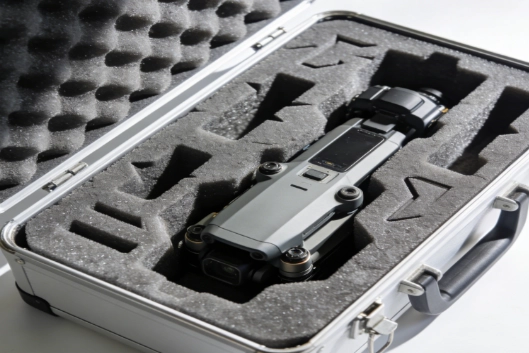
Foam-protected cases soak up and spread out energy from outside jolts. As a result, this process stops the direct pass-through of shocks to the protected objects. It greatly lowers the chance of breaks or failures. A smart foam arrangement not only softens blows but also keeps items steady. Thus, there is little inner shifting.
The foam’s makeup and thickness matter a lot for how it performs. Thicker foams resist squeezing more, so they fit well for weighty gear. Softer foams give better padding for fragile pieces. Plus, custom foam shapes or removable grids let each part sit firmly in its spot.
A good foam setup stops shifting and pads sensitive parts. Such an exact match is key in places with shakes, quick falls, or rough handling.
Core Materials Used in Foam-Protected Cases for Shock Protection
Picking the foam type affects how well it handles shocks. The usual choices for foam-protected cases are polyurethane, polyethylene (PE), and EVA (ethylene-vinyl acetate) foam.
Polyurethane feels soft and bounces back well. It gives great padding for sensitive gadgets or medical tools. Polyethylene, mainly in closed-cell style, is thicker and stiffer. It suits tough industrial or military items. EVA foam mixes bendiness and solidity. This makes it useful for many uses.
Closed-cell foams resist water and squeezing a lot. They work best for ongoing safety. These foams also hold up in damp or rainy spots. They avoid taking in water. That is vital for moving gear that needs to stay dry.
On the other hand, open-cell foams pad better at first. But they might squash over time with big weights. They absorb shocks well right away. Yet they can wear out with steady use, especially under heavy pressure.
Key Factors to Consider When Choosing Foam-Protected Cases
Matching Foam Density and Structure to Application Needs
Selecting the proper foam thickness is vital for the best safety. Thick foams suit rough or combat gear. They keep their shape under weight and rarely bend forever.
By comparison, thin foams aid light gadgets or careful tools. They absorb shocks well without pressing on breakable parts.
For trickier jobs, stacked foam layers mix thicknesses. For example, a soft top layer softens small hits. Meanwhile, a solid bottom layer supports against squishing. Stacked setups blend perks from various thicknesses for top results.
Evaluating Case Design for Enhanced Shock Absorption
The outer body style also boosts overall hit resistance. Important traits include strong edges, twin-wall builds, and firm locks that hold shut under strain.
Seek cases with strong edges, inner supports, and safe closings. These parts spread force from the case’s middle. That is where the most fragile items often sit.
Moreover, adjustable insides let people change foam plans for new contents. Built-in foam pieces should match the case’s strength. So, the hit-soaking traits of the body and inside work together well.
Available from Cas IFSTAR, these designs ensure reliable protection for various needs.
Industry-Specific Applications of Foam-Protected Cases
Foam-Protected Cases in Industrial and Field Equipment Transport
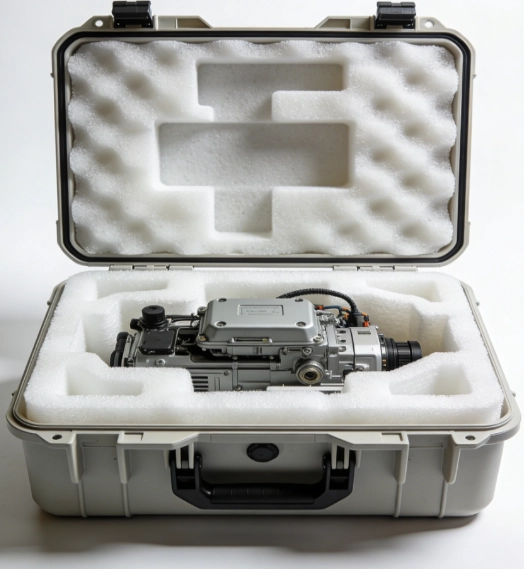
In factory settings, foam-protected cases carry tools, detectors, and setup devices. These items can suffer from shakes or quick shifts. They protect tools, sensors, and machines while moving or storing.
Such uses often face tough spots like dirt, dampness, and heat changes. They stand up to shakes, falls, and bad weather. Tailored cuts add safety by holding odd-shaped items tight.
Custom cuts give an exact hold for uneven items. This close fit cuts down on motion and lessens long-term damage.
For detailed advice on organizing gear, check the tool organizer guide.
Use of Foam-Protected Cases in Electronics and Medical Devices
Gadgets and health tools need extra guard against hits and static sparks (ESD). Anti-static foam types stop ESD harm.
Health tools must stay tuned and clean. Secure foam holds keep device position during travel. This helps maintain tuning by cutting inner motion on the go.
Light but strong cases are popular here. They meet tight shipping rules for careful devices.
From IFSTAR Cases, options like the TSA-approved gun case standards for 2025 provide similar robust features for secure transport.
Customization Options for Foam-Protected Case Inserts
Benefits of Tailored Foam Inserts for Shock Protection
Exact tailoring gives better safety by removing empty gaps in the case. Custom pieces boost safety by fitting the product’s form perfectly.
Logos can join these pieces without hurting their safety role. Logo parts can blend in without losing function.
Yiwu Yifu Products uses modern cutting methods like CNC routing for exact fits in product ranges. This accuracy helps makers needing steady packing for different types.
Explore PE vs PU foam materials for gun cases to understand material choices for specialized inserts.
Choosing Between Pre-Cut and Custom-Fabricated Foam Inserts
Ready-cut pieces, like pull-out foam blocks, are easy to get and cheap. Ready-cut choices save money but limit fits for tricky items.
But for top accuracy and trust, like in army or space jobs, made-to-order foam is smarter. Custom-made pieces give better shock soaking fit to exact needs.
Before picking insert styles, check your job’s timelines and amounts. Think about making schedules, batch sizes, and plan details when choosing insert types.
Evaluating Quality Standards in Foam-Protected Cases
Material Testing Protocols for Shock Absorption Performance
Dependable foam-protected cases face strict checks to prove they work in real life. Fall tests, shake trials, and squeeze runs check case toughness under pressure.
Products from IFSTAR Cases hit MIL-STD-810G approved hit safety. This makes them fit for big-risk spots like air or defense.
Avoid pitfalls with the 5 design mistakes that ruin your rack mount case—and how to fix them for better quality builds.
Certifications That Indicate Reliable Foam-Protected Case Construction
Approvals show quality and steadiness. For instance, seek ISO 9001 as a sign of steady making and quality checks.
Besides ISO rules, job-specific approvals might be needed. Certain field approvals (e.g., IP rating, RoHS compliance) may fit based on the setup.
IFSTAR Cases meets many world rules including IP67/IP68 (water & dustproof), MIL-STD-810G (MIL-grade shock resistance), RoHS & REACH (environmental safety).
From IFSTAR Cases, certified options align with the 1U and 2U server case dimensions guide for precise fits.
Common Misconceptions About Foam-Protected Cases
Misunderstanding the Limits of Shock Absorption Capabilities
Top foam-protected cases cut damage risks a lot. But no fix works perfectly every time. No foam-protected case can promise full safety against every hit type.
Bad loading ways, like packing too full or not tying items well, can weaken results. Overloading or wrong packing can lessen the hit-soaking perks.
Belief That All Foams Provide Equal Protection in All Situations
Many think any foam works for every case. But truth is more detailed. Various foam kinds react differently to heat changes, wet exposure, and repeat hits.
Foam choice needs a full grasp of surroundings and item weakness. Pick based on weather factors as well as item breakability levels. Only this way can users keep gear safe no matter the work needs.
For firearm transport, refer to the TSA gun case guide to ensure compliance and protection.
Petites boîtes – Yifu
Q: What are the main materials in foam-protected cases for shock protection?
A: The primary materials include polyurethane, polyethylene (PE), and EVA (ethylene-vinyl acetate) foam. Polyurethane offers soft, resilient cushioning for delicate items. Polyethylene, in closed-cell form, provides dense, rigid support for heavy gear. EVA foam balances flexibility and firmness for versatile use.
Q: How do foam densities affect shock absorption in protected cases?
A: Foam density directly influences performance. High-density foams resist compression well, ideal for heavy-duty equipment. Low-density foams provide superior cushioning for lightweight, fragile items. Layered structures combine densities for enhanced overall protection.
Q: What certifications should I look for in quality foam-protected cases?
A: Key certifications include ISO 9001 for manufacturing consistency, MIL-STD-810G for impact resistance, and IP67/IP68 for water and dust protection. These ensure reliability in demanding environments like industrial or military applications.

 French
  English
  Japanese