
Why is Cooler Case Efficiency Important for Temperature-Sensitive Goods?
The Role of Cooler Case in Maintaining Optimal Temperatures
Cooler case efficiency plays a key role in keeping temperature-sensitive items—like pharmaceuticals, biological samples, and perishable foods—within their needed temperature range during storage and transport. The cooler case’s design greatly affects its capacity to hold these ideal conditions. A smartly built cooler case employs superior insulation materials, tight seals, and sturdy reinforcements to cut down on heat transfer from the outside world.
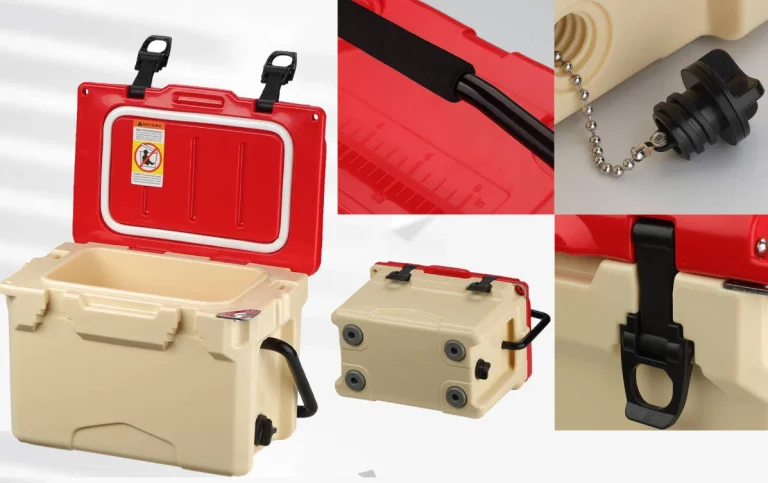
The military safety protection box consists of imported polymer material. It undergoes the latest one-time molding production process. It offers robust impact resistance, cushioning and shock absorption, heat tolerance and flame resistance, warmth retention and cold resistance, waterproofing and moisture resistance, floating for lifesaving, UV protection, non-toxic and odorless qualities, corrosion resistance and moisture-proofing, durability, and quick restocking. These features are vital for holding steady internal temperatures. They help avoid spoilage of delicate items. Cooler cases must include precise design features like pressure equalization valves and strengthened corners. These keep airtight conditions intact under diverse environmental pressures.
Steady internal temperature stops product spoilage or chemical changes. Even small variations can harm the quality of medical or food-grade items. Therefore, such cases need those elements to ensure reliability.

Factors Affecting Cooler Case Efficiency
Airflow route planning and fan positioning strategy are essential in deciding how smoothly cold air moves inside a cooler case. Bad airflow can form hot spots. These speed up decay or germ growth. Likewise, wrong fan spots can cause uneven cooling results.
Our cases come from high-impact polypropylene (PP), ABS, or composite plastics from IFSTAR ケース. They provide excellent strength, chemical resistance, and safeguards against falls, dirt, and water. These materials boost mechanical toughness. They also aid in effective temperature holding by lowering heat flow through the case walls.
How Does Airflow Path Planning Enhance Cooler Case Efficiency?
Designing Effective Airflow Paths in Cooler Cases
Good airflow route planning makes sure every part of the cooler stays at even temperatures. Engineers use computer models of airflow to spot dead areas or spots that trap heat. Better routes let cold air flow well around the stored items without blocks.
Issues come up when matching airflow speed with power savings. Too much airflow might dry out or shake fragile goods. To fix this, makers add adjustable openings or guides. These direct air smoothly while cutting down on rough flows. The case body uses anti-impact engineering plastic from injection molding. The waterproof rubber strip comes from foam silicone rubber. Operating temperature ranges from -40°C to 80°C. Protection class reaches IP67. Shock resistance hits IK08. These traits ensure airflow systems work well in harsh settings. They do so without harming the case’s build.
Impact of Airflow on Temperature-Sensitive Goods
Weak airflow causes local overheating or freezing in the cooler case. Such unevenness can change chemical makeup or shorten shelf life for living materials. On the other hand, strong airflow keeps evenness in all areas. It thus guards product quality during travel. For instance, in drug shipping where vaccines need tight cold chain control between 2°C–8°C, better airflow meets rules. It also cuts energy use from overworked compressors or fans. Cooler cases play a big part here. How can I clean and maintain my styrofoam cooler properly? Regular checks help keep them in top shape.
What is the Importance of Fan Placement Logic in Cooler Cases?
Analyzing Fan Placement for Maximum Cooling Efficiency
Fan positioning strategy controls how well cold air spreads inside a cooler case. Smart placement guarantees even flow. It avoids direct blasts that might freeze delicate stuff. Fans often go near parts that make heat or at balanced spots on inner walls. This evens out heat differences.
Designers look at load spread when picking fan spots. They ensure no area stays still. We use top materials and modern making methods. This guarantees each case hits strict strength and function marks. Such careful making aids right setup for fans and pipes. It holds stable inner temperatures even with heavy use. Cooler care involves simple steps like wiping down after each trip to prevent buildup.
Consequences of Ineffective Fan Placement
Wrong fan spots lead to poor cooling loops. Some areas stay warm while others get too cold. This unevenness raises compressor effort and speeds up system damage. For delicate items like lab chemicals or blood plasma, uneven cooling can make whole batches useless. It happens due to partial melting or crystal formation. A well kept cooler case avoids these pitfalls through proper setup.
How Does Thermal Load Distribution Affect Cooler Case Performance?
Understanding Thermal Load Distribution in Cooler Cases
Thermal load spread means how heat gets in or out of various parts of a cooler case while running. Even spread stops local weak points. These could weaken insulation over time.
To get balance, engineers apply heat mapping in testing stages. Inside the box, foam plastic buffers and shock systems position to protect transport parts under shakes. Such setups guard physical contents. They also steady inner temperatures by cutting conductive paths via foam layers. A solid cooler case like this ensures reliable performance.
Challenges in Managing Thermal Loads
Uneven loading—like piling heavy items on one side—can twist airflow routes. It raises power use as cooling parts adjust for gaps. Makers fight this with modular section systems. Users can spread weight evenly over surfaces. This keeps steady thermal action during storage times. How should I clean and maintain my koozies for long use? Gentle washing keeps accessories fresh and functional alongside the main unit.
What are the Benefits of Material and Vent Design in Cooler Cases?
Exploring Material Choices for Enhanced Cooling Efficiency
Choosing materials strongly shapes insulation power and total toughness of cooler cases. High-density polyethylene (HDPE), polypropylene (PP), and ABS mixes give low heat passage. They keep firm structure under pressure.
Our products mainly include hard plastic cases and aluminium boxes. We utilize the highest quality materials and advanced manufacturing techniques to ensure that each case meets stringent durability and performance standards. These engineering-grade plastics fight corrosion from wet exposure. They hold thermal steadiness over broad temperature spans—from -55°C up to 70°C. This makes them perfect for factory shipping and science uses.
Vent Design Considerations for Optimal Cooling
Vent setup works with material traits by handling air swap rates inside the cooler case. Well-placed vents permit controlled pressure balance without hurting insulation wholeness. Designs with watertight breather valves auto-adjust pressure gaps between inner areas. This matters a lot during height shifts in plane travel.
Good venting also cuts moisture collection. That could harm electronic sensors or item labels. By mixing smart vent shapes with strong seals like silicone gaskets or tight latches rated IP67/IP68, today’s cooler cases offer better guard against outside dirt. They keep exact climate control inside.

小さなケース - イフー
Q: What is the significance of a cooler case’s material choice?
A: The material used in a cooler case directly affects its ability to insulate and maintain stable temperatures, which is crucial for preserving temperature-sensitive goods. Our cases are made from high-impact polypropylene(PP), ABS, or composite plastics, offering superior durability, chemical resistance, and protection against drops, dust, and water.
Q: How does fan placement logic contribute to cooler case efficiency?
A: Strategic fan placement ensures optimal airflow within the chamber so that all areas maintain consistent internal temperatures without hotspots forming near insulated walls or dense cargo loads.
Q: Why is thermal load distribution important in a cooler case?
A: Balanced thermal load distribution prevents uneven cooling performance across compartments—ensuring all stored products remain within safe operational limits regardless of external environmental fluctuations—and preserves energy efficiency over extended operational periods through reduced compressor cycling frequency.

 Japanese
  English
  French