Choosing a rotomolded cooler for camping is not about finding the heaviest box or the longest lab ice claim. The right choice keeps food safely cold for the length of your trip. It can still be moved when packed. That balance depends on shell construction, insulation, capacity, packing habits, and the distance between your vehicle and campsite.
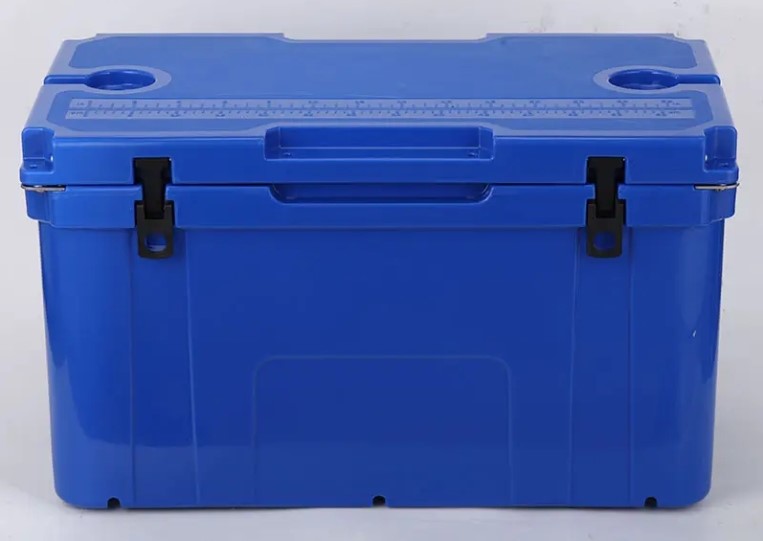
Does More Rotomolded Cooler Weight Mean Better Ice Retention?
In most cases, the extra weight will come from the thicker walls. Additionally, weight is contributed by extra insulation, stronger hinges, and a stiffer one-piece body. Those features slow heat transfer. They help the lid keep a good seal. Yet empty weight alone does not prove performance. A heavy cooler with a weak gasket, too much unused air space, or constant lid openings can lose ice faster than a well-packed smaller model.
Real-world tests often place quality rotomolded cooler ice retention around four to seven days. Weather and use can shorten or extend that window. Direct sun, warm food, frequent access, and an underfilled interior all increase melt. Treat an advertised day count as a comparison point, not a camping guarantee.
What actually protects the ice?
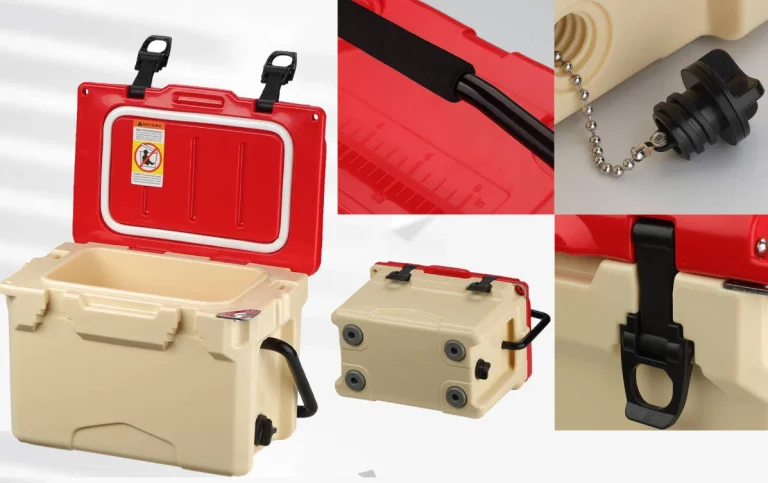
An even insulated body is what you are looking for: a tight gasket, Secure latches, a close-fitting lid, and a good drain that seals well. A rotoform cooler, for example, gets its durability from a seamless molded shell. The thermal result is, however, still highly dependent on the insulation density and the sealing quality.
Are Rotomolded Coolers Too Heavy for Camping?
This is true to some extent. The weight of an empty cooler increases rapidly with its capacity, especially after adding ice, drinks, and food. Therefore, when evaluating a cooler, it’s essential to consider not only its empty weight but also the weight when fully packed.
When does a lightweight rotomolded cooler make sense?
A smaller lightweight rotomolded cooler is the practical choice for solo campers. It works well for short weekends, frequent campsite moves, or any walk beyond the parking area. It also leaves room in the vehicle for tents and cooking gear. For longer vehicle-based stays, extra capacity and insulation may justify more mass.
Mobility features that offset rotomolded cooler weight
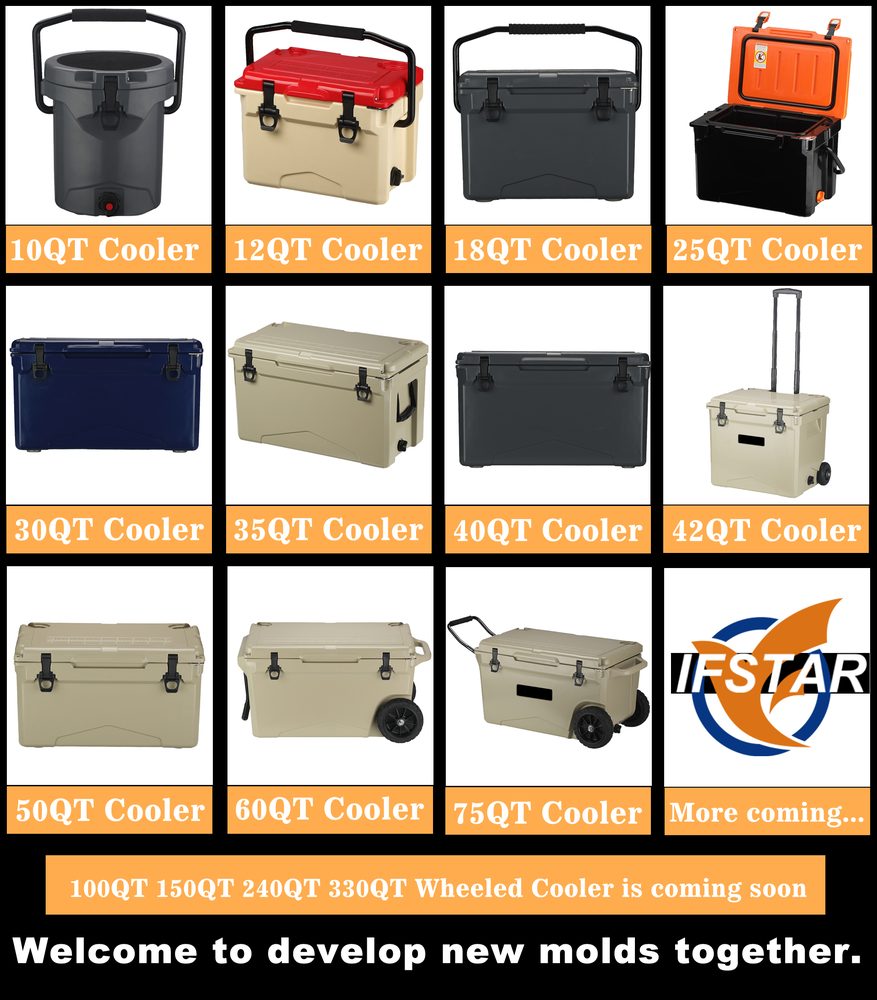
For larger cool boxes for camping, wheels and handles matter almost as much as insulation. Our 30QT, 42QT, 50QT, and 75QT configurations with two wheels. The 42QT version adds a telescoping handle. The 50QT specification includes ergonomic nylon handles. Test whether one person can lift the packed cooler over a trunk lip. Wheels do not help on stairs or during loading.
What Is the Best Cooler Size for Camping?
The best cooler size for camping matches group size, trip length, ice volume, and access frequency. Oversizing creates more warm air space. It adds unnecessary ice weight. Undersizing forces tight packing, repeated opening, or an ice resupply.
Use this field guide:
10–18QT: one person, day trips, or drinks and lunch.
25–30QT: one or two campers for a weekend when meals are planned carefully.
40–50QT: two to four people on a multi-day car-camping trip.
75QT and above: larger groups, longer stationary camps, or separate food storage.
IFSTAR Cases product information supports a broad camping range from 10QT backpack-portable models through 25QT, 30QT, 42QT/40L, 50QT, and 75QT wheeled formats. A useful alternative to one oversized cool box for camping is two smaller boxes. Keep drinks in the frequently opened unit and perishables in the other.
How Can You Improve Rotomolded Cooler Ice Retention?
Good packing can deliver more benefit than buying the next heavier size. Pre-chill the cooler overnight. Chill or freeze food before loading. Combine block ice for endurance with cubes for fast contact cooling. Fill gaps to reduce warm air. Keep the box shaded and off hot vehicle floors. Plan the contents so frequently used items sit near the top.
Open the lid briefly and less often. On longer trips, a dedicated drink cooler protects the food cooler from repeated warm-air exchange. Keep food in sealed containers above meltwater. Drain only when weight, hygiene, or access requires it. After the trip, wash with mild soap. Dry thoroughly. Store with the lid slightly open so the gasket is not continuously compressed.
At IFSTAR Cases, our cooler specifications pair Linear Low Density Polyethylene shells with PU filling on compact roto-molded models. They include airtight gasket seals, secure latches, non-slip feet, tie-down points, and easy-clean interiors. For buyers planning OEM or ODM programs, we offer support for custom colors, logos, molds, and storage boxes.
FAQ
Q: How long does a rotomolded cooler keep ice?
A: 4-7 days with good quality units kept outside in normal use. Note that the above statement is for illustrative purposes only and actual cooler performance will vary depending on many factors including: Ambient temperature, Sun exposure, Pre-cooling, Quantity of ice, Level of fill, and Frequency of lid openings.
Q: Are rotomolded coolers too heavy for weekend camping?
A: Not necessarily. A 10–30QT model can offer a sensible balance for one or two campers. Larger models become difficult when loaded. Choose wheels, strong handles, or two smaller coolers if one-person handling matters.
Q: Which cool box for camping offers the best balance?
A: Choose the smallest capacity that holds your planned cold contents plus enough ice. For most car-camping weekends, 25–50QT is a useful decision range. Group size and meal plan should determine the final choice.
Q: Is a rotomolded cooler for camping worth the extra weight?
A: Yes, when you need multi-day cold retention, impact resistance, and dependable sealing away from ice supplies. For a picnic or a long carry on foot, portability may matter more than maximum retention.