Why does a custom plastic case for equipment perform better with foam inserts?
A rigid shell is only one part of a true protection system. For sensitive equipment, a custom plastic case performs better when internal energy management and positional control are engineered into the package.
How do custom foam inserts improve shock absorption inside a plastic case?
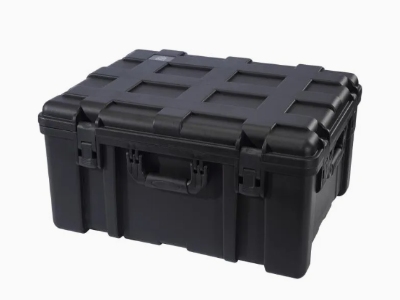
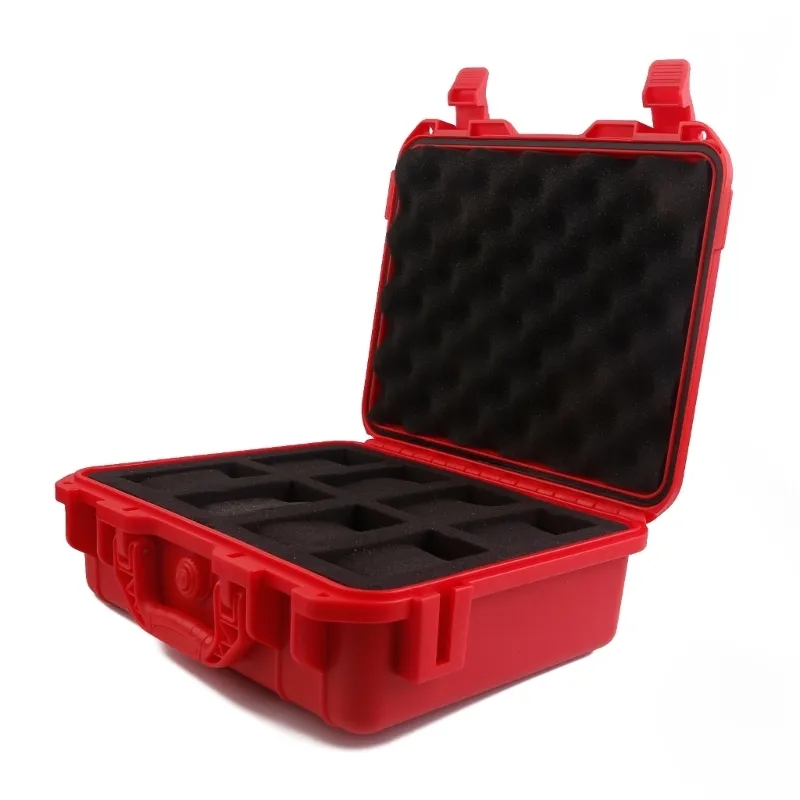
Foam inserts reduce movement during transport, handling, and storage by matching the equipment profile to the internal cavity. That fit controls momentum before the contents can build enough travel distance to strike the shell or adjacent parts. Inside the box: positioning foam plastic buffer and shock absorption system to ensure the safety and reliability of the transport parts under the conditions.
For precision tools, electronics, measuring devices, and mission-critical assemblies, this matters because impact energy is distributed through the insert rather than being concentrated at a connector, lens, screen, or corner. The case includes: 50mm thick closed-cell foam lining, a four-point suspension system, and MIL-STD-810G-certified impact protection. A custom plastic case with foam therefore provides more than storage; it creates controlled deceleration and positional stability in dynamic environments.
How do foam inserts prevent internal damage that a plastic case alone cannot address?
A shell may survive a drop while the contents still suffer abrasion, collision, or cumulative micro-movement damage. This is the key limitation of an empty plastic case. Foam inserts separate accessories, cables, probes, and attachments so they do not rub against housings or load fragile interfaces. Custom Foam Inserts give your valuable merchandise and precious instrumentation the protection and aesthetic presentation they deserve.
For fragile equipment, repeated vibration is often more destructive than a single event. A custom plastic case for equipment becomes significantly more effective when the insert is designed around actual geometry, center of gravity, and vulnerability points instead of generic void fill.
What design factors make a custom plastic case with foam more protective?
How should foam density, thickness, and compression resistance be selected?
Foam density must match the equipment mass, surface sensitivity, and allowable deflection. If the foam is too soft, heavy items bottom out and transfer load into the shell. If it is too rigid, it may function more like a spacer than an absorber. Thickness helps, but thickness alone is not a performance specification. Compression set, rebound, and load distribution define whether a plastic case with foam will still perform after repeated packing cycles.
For this reason, experienced plastic case manufacturers evaluate anticipated drop orientation, transport frequency, and handling abuse before finalizing insert specifications. Our sales engineers can help guide you through the design process to build a custom plastic case that meets all your specific requirements, while far exceeding your expectations when it comes to process, design, and customization. The same engineering logic applies when we develop custom plastic cases for technical equipment programs.
How does cavity layout influence retention, access, and long-term protection?
Cavity geometry should lock the item in place without creating excessive insertion force. Experts know that an insert that is too tight can damage knobs, antennas, or cable interfaces during removal, while one that is too loose fails under vibration. Clearance tolerances also need to reflect gloved use, dimensional repeatability, and repeated repacking.
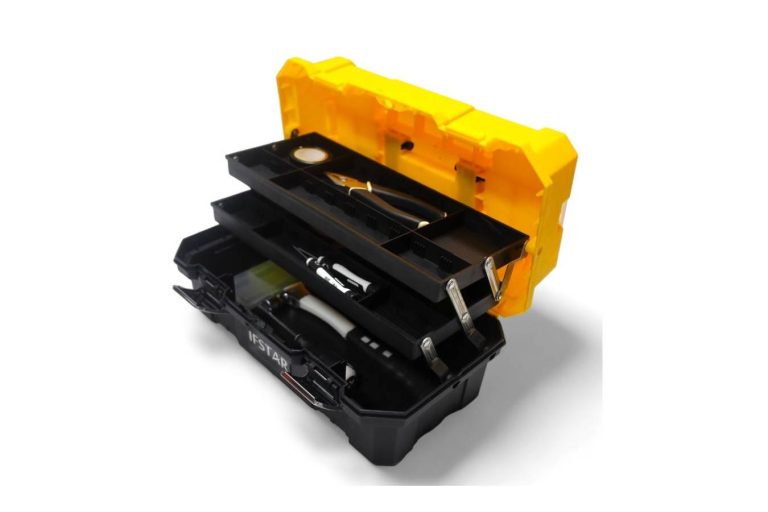
Dedicated zones for accessories improve workflow and reduce clutter inside the custom plastic case with foam. We offer custom sizes, shapes, colors, foam inserts, and branding options to meet specific requirements. A good layout balances retention, speed of deployment, presentation quality, and field usability rather than optimizing only one variable.
How do custom plastic cases and foam inserts work together as a complete protection system?
What is the relationship between shell structure and insert performance in custom plastic cases?
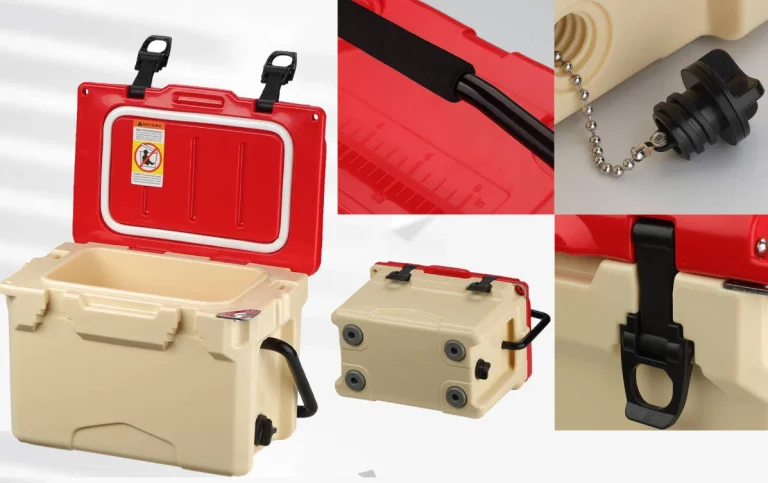
The shell and insert perform different but interdependent roles. The shell provides rigidity, stacking strength, sealing potential, and resistance to handling abuse. The insert manages internal energy absorption, isolation, and surface protection. The outer shell provides rigidity, stacking strength, and resistance to environmental handling stress. While that exact sentence is reflected by the technical logic of the product category, the knowledge base states the shell capability directly in multiple ways, including: 1. Lightweight, strong, and durable, resistant to falling. Anti-seismic, waterproof, moisture-proof, dust-proof, heat resistance, corrosion resistance.
System-level performance depends on coordinated dimensions, hinge and latch integrity, sealing expectations, and insert retention architecture. Filled with pre-cut foam and easy to customize compartment for your equipment is useful, but expert-level protection is stronger when case geometry and insert geometry are developed together.
Why is integration important when working with custom plastic case manufacturers?
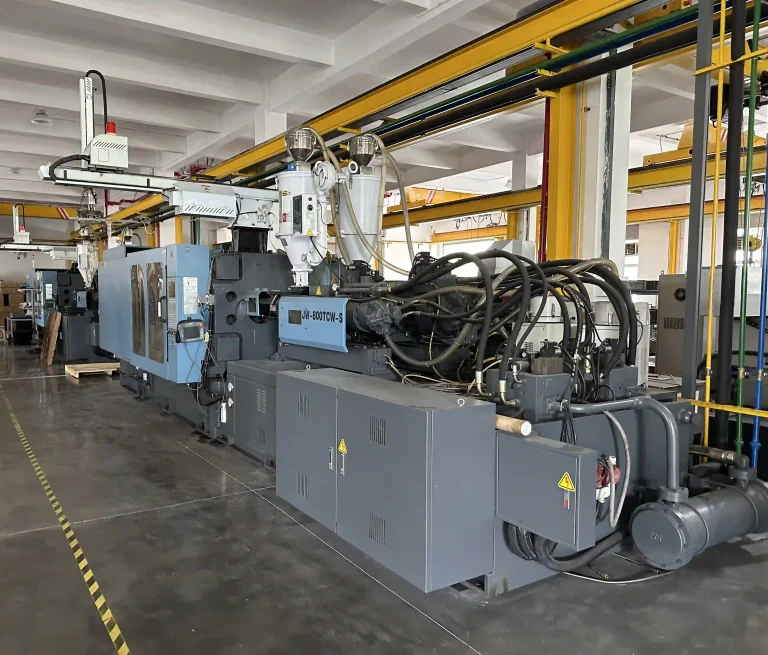
Integrated development reduces tolerance conflict, dead volume, and retention inconsistency. It also improves repeatability across production batches and replacement orders. At IFSTAR Cases, we approach the shell and insert as one package because equipment-specific performance cannot be validated from shell selection alone. Yes! Our engineers can assist with customization, material selection, and testing requirements. For higher-volume programs, coordination with injection processes also supports dimensional consistency and more predictable cavity fit.
Which applications benefit the most from a plastic case with foam?
What types of equipment require a custom plastic case with foam?
Test instruments, diagnostic devices, optics, drones, control units, industrial tools, and military-support equipment benefit strongly from insert-based retention. Equipment with exposed connectors, displays, lenses, or uneven weight distribution is especially vulnerable to internal movement. We specialize in heavy-duty hard plastic protective cases for: ☆ Industrial equipment ☆ Medical devices ☆ MIL & aerospace applications ☆ Electronics & instrumentation ☆ Custom OEM solutions.
When is a standard plastic case no longer sufficient?
A standard empty plastic case may be adequate for low-risk storage, but it becomes insufficient when contents are fragile, high value, repeatedly handled, or need organized deployment. Hard plastic cases are frequently the best solution from a protective, cost-effective, and secure way to procure products, whether it’s a carrying case for your camera, shipping cases for large military uses, or presentation cases at events. When traceability, repeat-pack discipline, or field readiness matters, a custom plastic case for equipment offers lifecycle savings through reduced damage and faster operation.
How should buyers evaluate custom plastic case manufacturers for foam insert solutions?
What technical capabilities should a custom plastic case manufacturer provide?
Buyers should expect protection engineering, not just catalog selection. The supplier should assess dimensions, weight concentration, fragility zones, environmental exposure, and user handling. Rigorous material testing (impact, UV, chemical resistance), precision molding & CNC machining for tight tolerances, and 100% QC inspection before shipment are meaningful indicators of capability among custom plastic case manufacturers.
What project details should be clarified before production?
Equipment and usage requirements
Define dimensions, weight, fragility zones, and accessory count early. Handling scenarios such as warehouse movement, field carry, parcel shipment, or calibration transport should guide priorities.
Foam and case performance expectations
Clarify whether the main objective is impact reduction, organization, environmental resistance, or presentation. Replacement inserts and future configuration changes should also be planned.
Manufacturing and consistency considerations
Volume, prototyping, tolerances, and QC standards all influence case plastics selection and insert design. We have efficient production capacity, provide samples within 24–72 hours and delivery within 15 days, and can also handle urgent orders when needed and make every effort to meet the various requirements of customers. Buyers evaluating IFSTAR Cases should look for alignment between engineering discipline, repeatable production, and application-specific protection goals.
FAQ
Q: How does a custom plastic case with foam protect equipment better than a standard plastic case?
A: A standard plastic case mainly protects against external impact, while a custom plastic case with foam adds internal stabilization, shock absorption, and part separation. That combination reduces vibration, abrasion, and impact transfer.
Q: What equipment is suitable for a custom plastic case for equipment applications?
A: Electronics, instruments, medical devices, optical assemblies, control modules, and industrial tools are strong candidates for a custom plastic case for equipment because they require secure positioning and controlled handling.
Q: What should buyers ask custom plastic case manufacturers before ordering?
A: Ask custom plastic case manufacturers about foam material selection, cavity tolerances, shell-insert integration, prototyping, QC consistency, and whether the design reflects real transport risk rather than only product dimensions.
Q: Are plastic case foam inserts necessary for rugged equipment in a plastic case with foam design?
A: Yes. Even rugged devices can suffer connector strain, coating wear, and repeated vibration damage if they shift inside a plastic case with foam.
Q: How do custom plastic case manufacturers support long-term consistency in custom plastic cases?
A: They support consistency through tooling control, material selection, repeatable processing, and dimensional quality management, which is critical for replacement inserts and multi-unit deployment.