A good storage toolbox controls how quickly you find a driver bit, safely move a loaded kit, and expand your system. Portable, drawer, transparent, and wheeled formats solve different problems. This guide compares their strengths, limits, and best applications.
Which Tool Storage Box Type Fits Your Work?
Portable tool storage box: fast access on the move
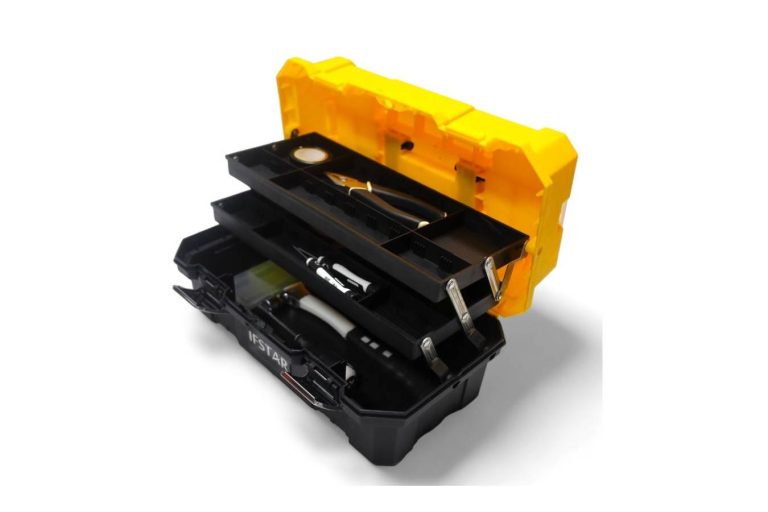
A portable tool storage box is the simplest choice for a focused kit of hand tools. A top handle, secure latches, and a removable tray let you carry frequently used items while keeping the lower compartment open for bulkier tools. This format suits home repairs, mobile technicians, and task-specific kits.
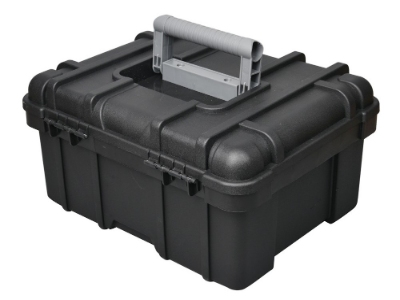
Check the loaded weight, not only the empty box. A compact box becomes uncomfortable if it is filled with dense sockets or metal fittings. A balanced handle, impact-resistant body, dependable hinge, and latch points matter more than excessive interior volume.
Tool storage box with drawers: organized, visible access
A tool storage box with drawers separates tools by type, size, or workflow. Shallow drawers work well for sockets, bits, pliers, measuring tools, and consumables because you can reach one group without lifting out a tray. Drawer cabinets are especially effective at a bench, where repeated access matters more than carrying distance.
Our internal product catalog includes rugged plastic drawer modules with 8 to 60 small drawers, clear fronts, lightweight construction, and wall-mount capability. That range illustrates why drawer storage can scale from a small parts station to a workshop inventory point.
Transparent tool storage box: identify parts before opening
A transparent tool storage box reduces search time when the contents are screws, anchors, terminals, washers, drill bits, or craft and repair components. Clear lids or drawers support quick visual checks and make low stock easier to notice.
Look for dividers that meet the closed lid closely enough to stop small pieces migrating between compartments. Removable inserts are valuable when component sizes change. IFSTAR Cases product documentation describes PP organizers with clear lids, removable dividers, comfortable buckles, and single- or double-sided layouts; some models offer 7, 13, 17, 22, or 34 compartments.
Wheeled tool storage box: move heavy or high-volume kits
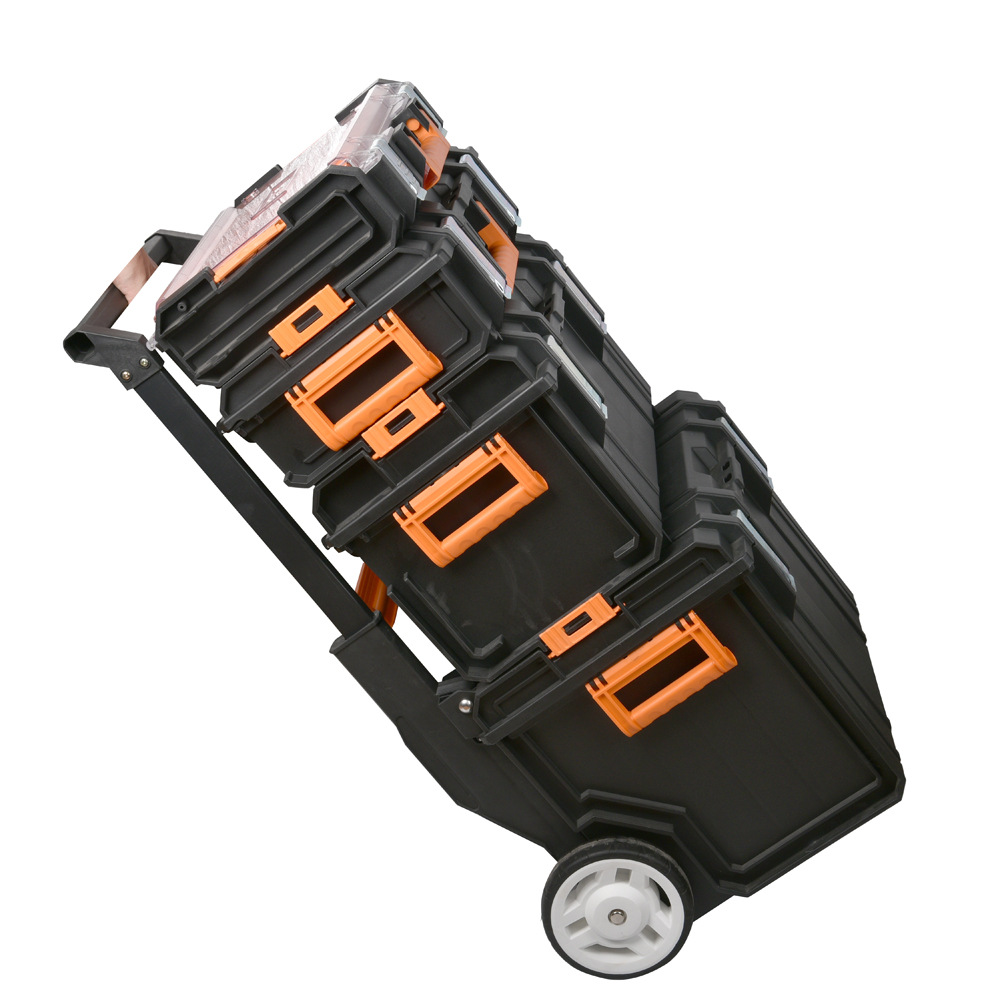
A wheeled tool storage box is useful when the kit is too heavy to carry comfortably or must travel repeatedly between a vehicle and work area. Large wheels handle thresholds better, while a telescoping pull rod keeps the load upright. This option is strong for power tools, maintenance kits, and multi-box systems.
Mobility has trade-offs. Wheels and handles consume space, increase cost, and can be awkward on stairs. Check wheel diameter, axle support, handle extension, ground clearance, and whether the lid or drawers remain accessible when other boxes are stacked above.
When Does a Portable Tool Storage Box Make Sense?
Choose portable storage when your working set is limited, and you regularly carry it through doors, up steps, or into a vehicle. It is also useful as a “first-response” kit containing the small group of tools used for most jobs.
A storage box for hand tools should have enough length for screwdrivers and pliers, a tray for precision items, and a deeper base for a compact drill or test instrument. In our catalog, classic PP toolboxes are offered in sizes from 10 to 22 inches, commonly with a tray and lid compartments. Reinforced versions add metal buckles, impact-resistant structures, and top parts boxes. These details are practical signals to compare, regardless of the exact size you need.
How Do Drawer and Transparent Options Improve Small-Parts Storage?
The best small parts tool storage box prevents mixing as well as clutter. Drawer labels help when multiple users share a workshop, while a clear lid is faster for a mobile assortment. For frequently replenished parts, use one compartment per item family and label both the compartment and its restocking location.
A compact tool organizer box should also adapt. Movable PP inserts allow one long space for drill bits or blades and smaller cells for fasteners. Double-sided organizers increase capacity without greatly increasing footprint, but both sides need independent, reliable latches. At a fixed bench, clear drawer modules make counts easier and can free the work surface when mounted on a wall.
What Material and Build Features Matter Most?
A plastic tool storage box is lightweight, corrosion-resistant, and easy to clean. Polypropylene is common for bodies, trays, handles, buckles, bins, and dividers. For heavier duty, examine wall reinforcement, hinge construction, latch material, and the way the handle transfers load into the body.
Material alone does not determine durability. A well-ribbed plastic shell can outperform a poorly supported larger box. For outdoor or vehicle use, consider water resistance, dust control, UV exposure, and whether a seal is specified. For workshop drawers, prioritize smooth movement, stops that prevent accidental removal, and frames that resist twisting under load.
A Practical Tool Storage Guide for Choosing the Right Format
Start with the tools, then choose the container:
- List the load. Measure the longest tool and estimate total loaded weight.
- Map the work path. Note stairs, rough ground, vehicle space, and carrying distance.
- Separate access patterns. Put daily tools near the top; reserve deep storage for bulky or less-used items.
- Plan for small parts. Use sealed compartments, clear drawers, or removable dividers where mixing would cause delays.
- Check future growth. Leave modest spare capacity or choose stackable tool box storage options.
No single format wins every comparison. A portable box is efficient for a light service kit; drawers favor fixed, repeated access; transparent storage improves identification; and wheels reduce strain with heavy loads. Many users benefit from a hybrid system: a wheeled base for bulky tools, a drawer module for hand tools, and a clear organizer for small parts.
At IFSTAR Cases, we use OEM/ODM capability to adapt storage layouts, colors, handles, buckles, inserts, and compartments to project needs. Our website notes more than 100 molds in R&D and cooperation, a team of over 60 experienced professionals, 24–72-hour sample support, and 15-day fast delivery for standard orders. Buyers should confirm current specifications and lead times for their chosen configuration.
FAQ
Q: What is the best storage toolbox for home use?
A: For general home repairs, choose a medium portable box with a tray and one or two small-parts compartments. If most work happens at a bench, add a clear drawer organizer for screws, bits, and fittings.
Q: Is a tool storage box with drawers better than a top-opening box?
A: Drawers are better for sorted, frequent access because you do not need to remove upper trays. A top-opening box is usually lighter, simpler, and easier to carry.
Q: What should I store in a transparent tool storage box?
A: Use transparent storage for small items that are easy to confuse or lose, including fasteners, terminals, anchors, drill bits, blades, and repair components.
Q: When should I choose a wheeled tool storage box?
A: Choose wheels when the loaded kit is too heavy for comfortable carrying or must move repeatedly across a workshop or jobsite. Check terrain, stairs, wheel size, and handle strength first.
Q: How do I organize toolbox storage efficiently?
A: Group tools by task or frequency, keep heavy items low, label compartments, return tools to fixed positions, and review the layout whenever the kit grows.