Global Conflict and the Surge in Firearm Use
The Strategic Role of Firearms in Modern Warfare
Modern conflicts are increasingly defined by asymmetric warfare. Traditional large-scale battles have largely given way to:
- Insurgency tactics
- Guerrilla operations
- Decentralized combat
This shift has made small arms and personal weapons the core of ground operations. Individual firepower now often decides outcomes in both urban fights and rural insurgencies.

Secure transport and storage of firearms have become essential to military planning. Key reasons include:
- Multiple active conflict zones
- Rapidly changing frontlines
- Movement across air, sea, and land routes
As a result, there is strong demand for durable gun cases. Weapons face harsh conditions such as extreme weather, sudden tactical moves, and high-mobility operations. Defense industries worldwide are responding by developing advanced protective solutions that maintain weapon performance under stress.
Trends Driving the Spread of Firearms in 2025
2025 has seen a sharp rise in regional conflicts and proxy wars. Major hotspots include Eastern Europe, the Middle East, and parts of Africa. This has led to widespread militarization.
Other key drivers of firearm proliferation:
- Non-state actors and militias gaining more weapons
- Growth of private military contractors (PMCs) and cross-border paramilitary groups
- Weakening of international small-arms trade controls
- Loopholes in arms treaties and rising black-market activity
These factors combine to push large volumes of small arms into conflict zones.
The Critical Role of Gun Cases in Combat Environments
Essential Functions of a Gun Case in War Zones
Gun cases do far more than simply hold weapons. They are vital logistics tools that:
- Shield firearms from dust, sand, humidity, and water — common threats in desert, jungle, and coastal areas
- Provide strong impact resistance and shock absorption
- Offer heat and cold resistance, plus waterproof and moisture-proof features
Many military-grade safety protection cases, such as the renowned IFSTAR Cases series, are made of imported polymer material and processed by the most advanced one-time molding production process. It has strong impact resistance, buffer and shock absorption, heat resistance and flame retardant, heat preservation and cold resistance, waterproof and moisture-proof.
Cases also ensure safe transport over rough terrain and in hostile settings, where drops or nearby explosions can easily damage unprotected weapons.
Environmental Threats to Firearm Integrity
Combat zones expose weapons to multiple risks that can impair function:
| Threat | Example Environment | Potential Damage |
|---|---|---|
| Salt corrosion | Maritime or coastal ops | Metal pitting and weakening |
| Condensation rust | Humid jungles | Internal rust on critical parts |
| Extreme temperature | Desert or arctic areas | Material fatigue or expansion |
Cases counter these with operating ranges from -40°C to 80°C and anti-impact engineering plastic construction.
Innovations in Gun Case Technology for 2025 Warfare
Materials Engineering for Durability and Resistance
Top gun cases in 2025 use advanced materials that balance strength and weight:
- Polymer composites → excellent impact resistance and light weight
- Reinforced aluminum alloys → superior durability at competitive cost
- Carbon fiber shells → premium strength-to-weight ratio
Example: The MIL-Aluminum series uses .063 and .080 5052 aluminum alloy with welded seams for battlefield-grade toughness.
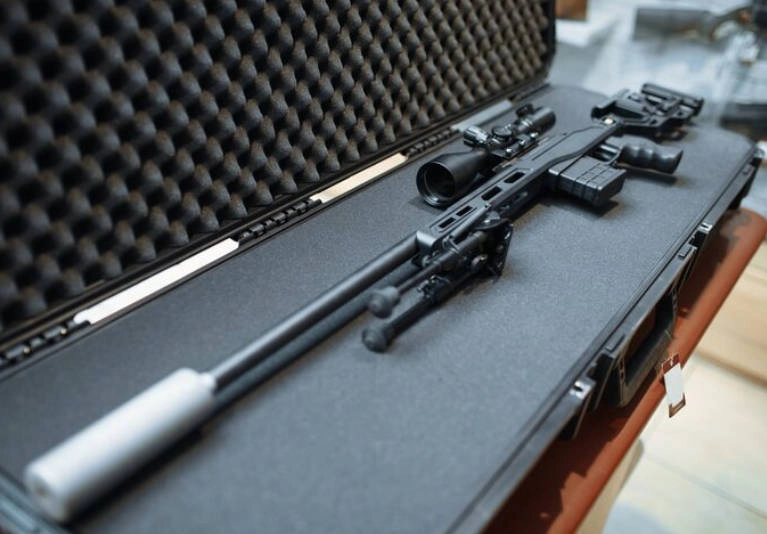
Custom foam inserts cradle weapons securely and protect against blasts or falls.
Integrated Environmental Controls
Modern cases include built-in features such as:
- Watertight breather valves that equalize pressure and prevent condensation
- Desiccant pack compatibility for extra moisture absorption
- Structural fixes to stop internal shifting during movement
Tactical Portability Features
Frontline users need easy carry options. New designs offer:
- Integration with body armor or load-bearing gear
- Wheels and telescopic handles on larger cases
- Stackable shapes for efficient storage
- Custom colors and hardware for professional appearance
Rotational molding enables these ergonomic improvements while keeping cases tough and lightweight.
Maintenance Protocols for Combat-Deployed Firearms in Gun Cases
Best Practices for Cleaning After Field Use
Clean weapons after every mission exposed to dust or rain. Use solvents safe for both gun finishes and case foam. Standard cleaning kits often include:
- Chamber brushes
- Bore snakes
- Microfiber cloths
- Compressed air nozzles
Preventive Measures Against Rust
Control moisture from the start:
- Place desiccant packs inside the case
- Open cases during downtime to let air circulate
- Rely on high air tightness and resilient materials to avoid permanent deformation
Legal Considerations Surrounding Firearm Transport and Storage in Global Conflicts
International Laws
All cross-border firearm movement must follow treaties like the Arms Trade Treaty (ATT), which covers small arms and light weapons (SALW). Key requirements:
- Assess risk of human rights violations or conflict escalation
- Maintain full documentation and end-user certificates
Violations can trigger sanctions or embargoes.
Compliance for Contractors and State Actors
Both government forces and private contractors need:
- Detailed record trails
- Secure storage to prevent theft or diversion
- Cases meeting international standards (e.g., IP67, CE, ROHS, ISO9001, BSCI certifications)
Certified cases help ensure traceability and regulatory acceptance worldwide.
As firearm spread continues across 2025 conflict zones, advanced gun cases remain essential. They boost tactical effectiveness while helping meet strict international rules.
FAQ
Q: What’s the main job of a gun case in today’s combat zones?
A: It keeps guns safe from dust, moisture, sand, and harsh temperatures. It also cushions them against bumps during movement and operations.
Q: What materials are typically used for top-quality gun cases in military settings?
A: High-end ones often use imported polymer blends for being light yet tough against impacts. Others rely on strengthened aluminum alloys for superior durability and better value.
Q: How do modern gun cases stop rust and other damage to weapons?
A: They feature airtight seals and automatic pressure-release valves. Custom-cut foam liners hold the firearm steady. Many include desiccant packs to manage humidity in different environments.