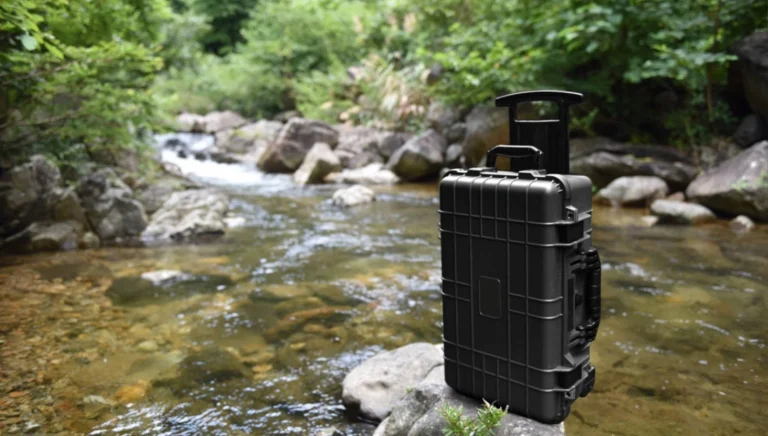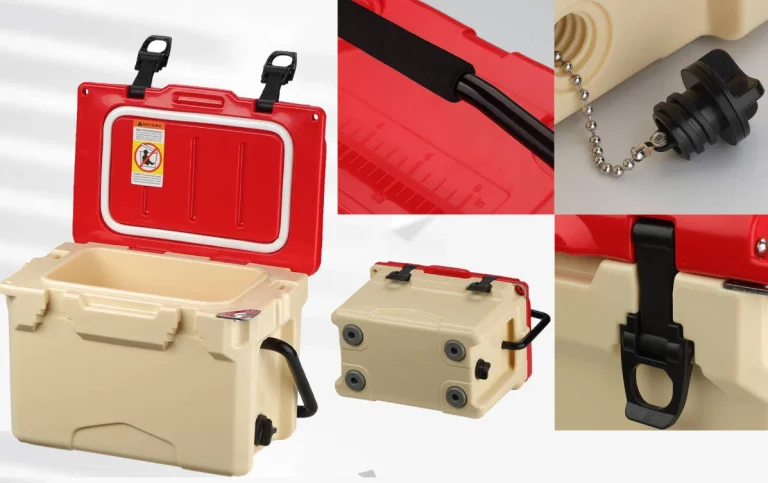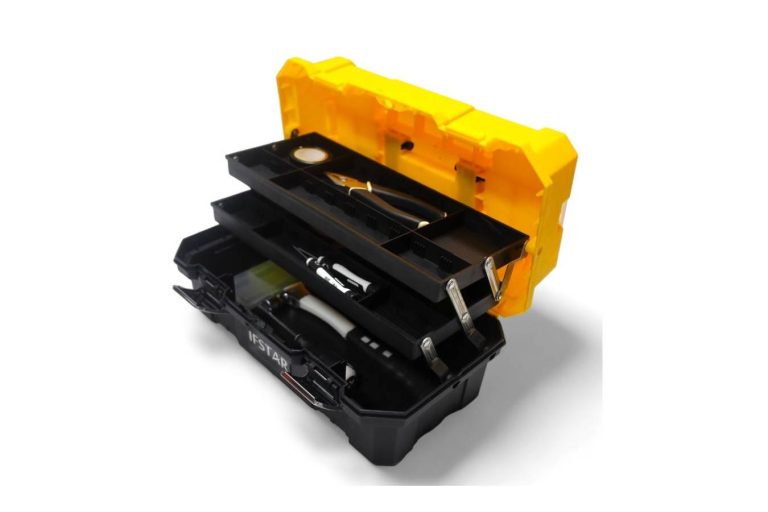
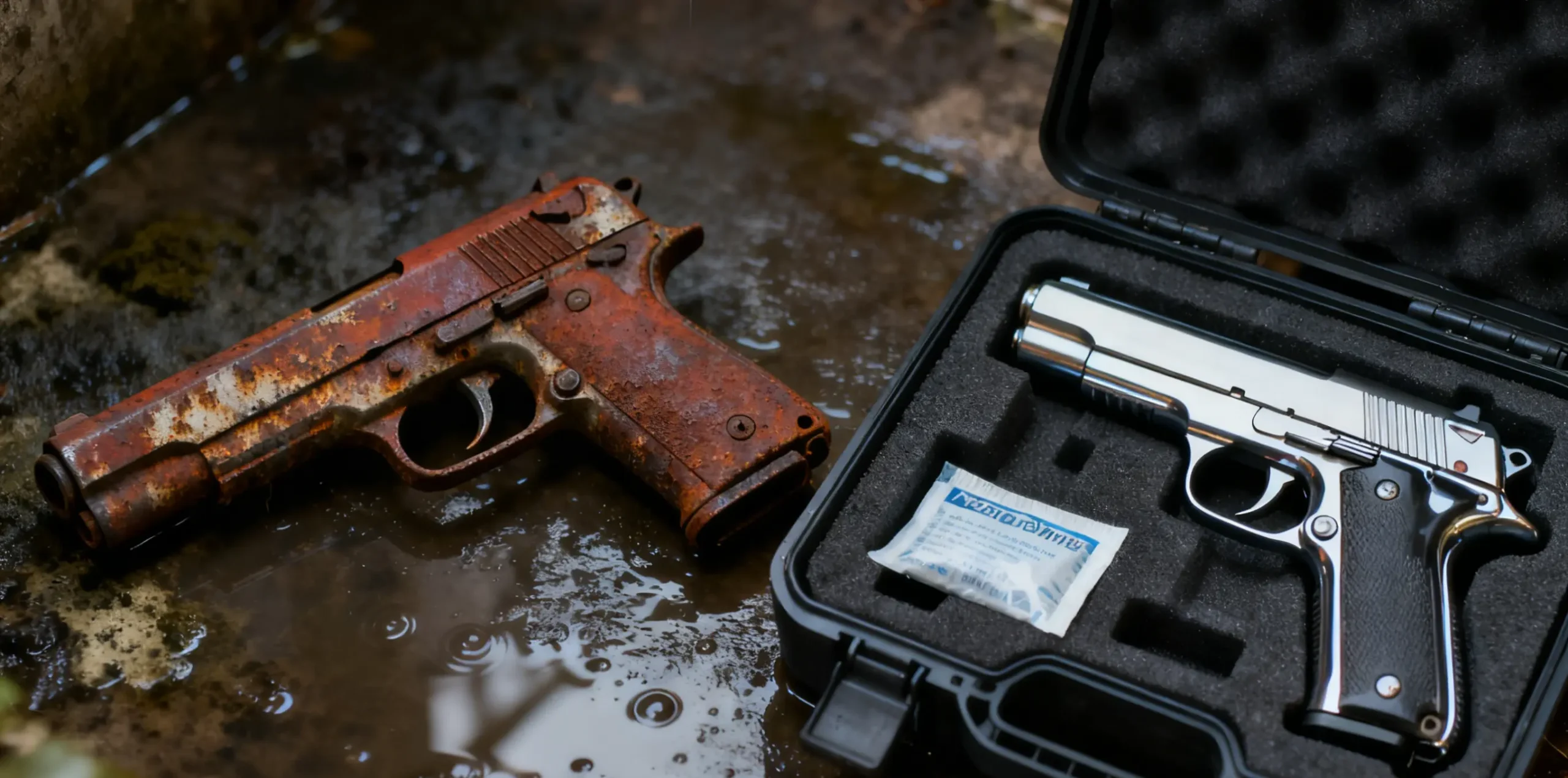
Nothing hits a gun owner harder than opening a hard plastic gun case in the garage or basement and spotting orange spots on the barrel of a prized rifle. You recall cleaning it off before putting it away. But now the bolt sticks, the action feels rough, and light rust covers the surface. This common problem is easy to avoid.
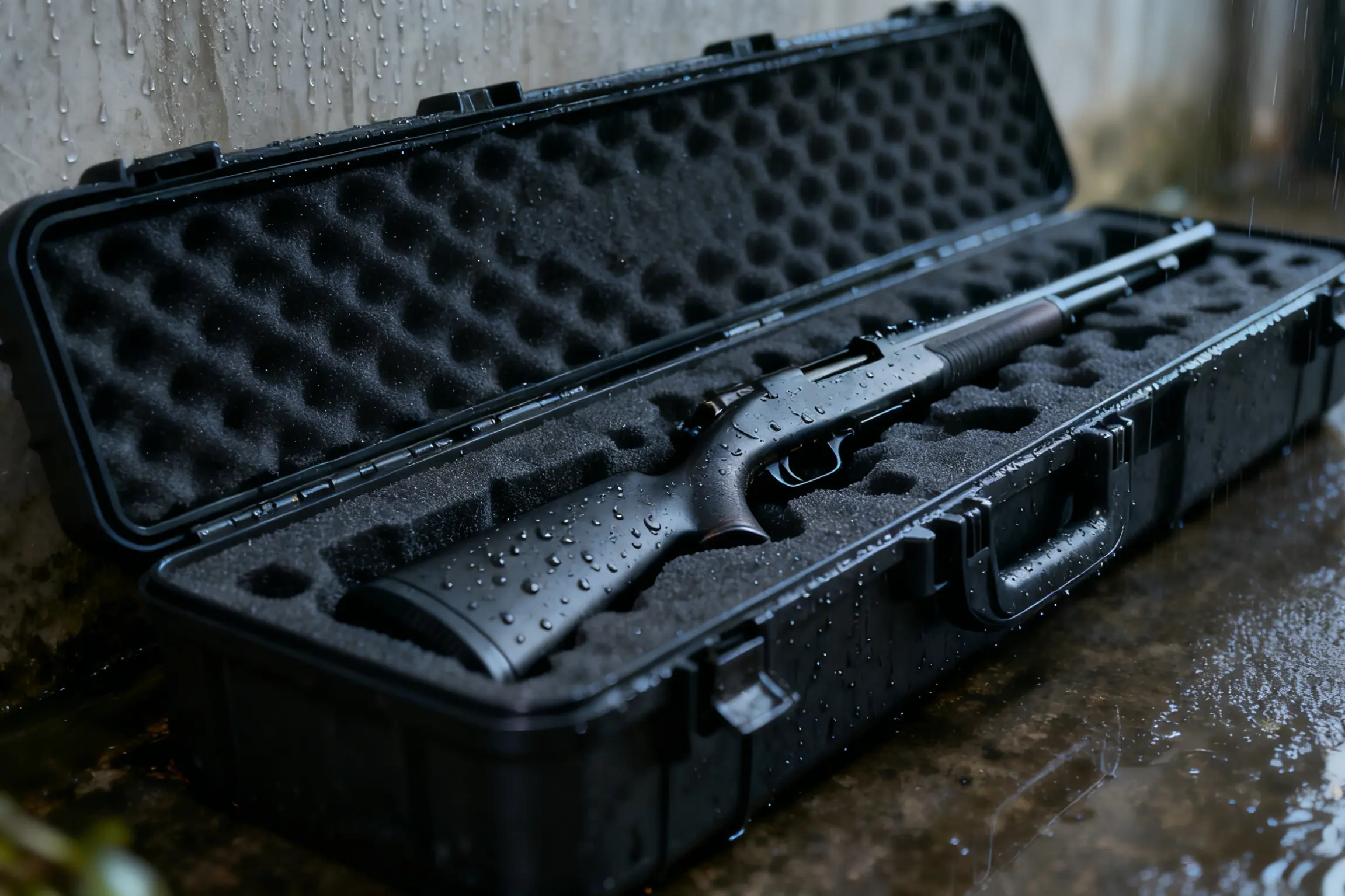
Garages and basements seem handy for keeping guns. But they create tough conditions with big changes in temperature, lots of moisture in the air, and concrete floors that release dampness. These shifts and wet air lead to water droplets forming inside cases. That slowly causes metal to corrode.
Here is the basic fact: rust starts when air moisture levels stay over 50–55% for a long time. You might not see any water. But damp air alone can harm bare metal. Many gun owners do not notice this until damage shows up.
The good part? You do not need a costly safe or room with controlled air to keep guns safe. These six reliable case methods will keep your guns dry and free of rust in even the wettest spots. No fancy safe needed.
Pick a Hard Case with a Proper Gasket Seal (Not Only Foam and Clips)
Many cheap plastic cases depend on foam inserts and simple clips. They give little real defense against damp air getting in. In wet areas like garages and basements, these cases let outside air enter. That brings in moisture.
Go for a hard plastic case with a true gasket seal instead. Choose ones rated IP67 for waterproofing. These often use strong ABS or polypropylene materials and O-ring seals. It has an IP67 waterproof rating. That means it blocks dust fully and can handle being underwater 1 meter deep for 30 minutes. These seals turn the case into a small protected space. They keep out damp air and dirt.
To check your case seal, put a bit of tissue inside and close it. Then dip part of it in water. If the tissue remains dry, it works well. If not, consider a better one.
Good makers like IFSTAR Cases produce cases from strong ABS plastic with aluminum supports. They handle heavy drops, resist crushing up to 500 lbs, and work in temps from -20°F to 150°F. Their foam is closed-cell type that resists water and does not soak up dampness. This stops rust from starting inside.
Make Your Case a Small Dry Space with Rechargeable Moisture Absorbers
A sealed gun case might still hold some damp air inside. That is why moisture absorbers are important.
Silica gel packets work well and cost little. For cases that hold rifles, add at least two 40-gram packets. For bigger boxes or metal cases, try rechargeable electric models like the Eva-Dry E-333 or small rod types for tight areas.
Put a small digital humidity gauge in the case to watch levels. Options like the ThermoPro TP49 are exact, small, and cheap. Try to stay under 50% RH.
Set up a simple care list:
- Renew silica packets every 30–60 days
- Change them every 6–12 months (or earlier if full)
- Look at gauge readings each month
This easy habit makes your case a controlled dry spot.
Use Rust-Blocking Vapor Pods or Zerust Inserts in the Case
To go further than just pulling out damp air, you can stop corrosion directly with VCI (Vapor Corrosion Inhibitor) items. VCIs release tiny particles that stick to metal and create a hidden barrier against damage.
Good choices are Zerust pods (stick-on types that work up to 2 years), VCI gun covers, and Bore-Stores that add soft lining with protection.
How VCI technology works: The vapor spreads in the closed space and bonds to metal without harming sights or coatings. It works on all kinds of guns.
Change VCI items as suggested — often every 12–24 months based on conditions. A quick note on your calendar helps you remember.
Apply the Best Long-Term Coating to Guns Before Closing the Case
A fast clean with CLP is not enough for long storage in wet places. You want strong blocking against corrosion.
Select coatings made for extended storage:
- Eezox: A dry-type lube that fights damp air even in hot, wet areas
- RIG (Rust Inhibiting Grease): Great for spots where metal touches metal, like bolts and barrels
- Fluid Film: Made from lanolin and strong against salty or wet air
Steps to apply:
- Clean every part well
- Dry fully (blow air into small areas)
- Spread coating evenly with a clean cloth
- Rub off excess to leave a light layer
Steer clear of errors like WD-40 — it fades fast and can pull in more dampness later.
Raise and Separate the Case from Concrete Floors
Concrete seems dry when you touch it. But it keeps giving off dampness — worse in wet weather. Setting your case right on concrete can cause water droplets below it. That may work into the case bottom.
Use basic stands like wood platforms, rubber mats, or upside-down plastic containers. For small cases, hang them on wall holders to stay off the ground.
This also guards against quick floods or leaks — helpful in wet seasons or if pipes break.
Follow a 90-Day Check Routine (Even for Sealed Cases)
With good seals and absorbers, still open sealed cases every 90 days — more in very wet spots.
Damp air can enter bit by bit from air pressure shifts or tiny seal flaws. A fast check every three months lets you spot early rust signs before harm grows.
Your check list:
- Read the humidity gauge
- Look at all metal under bright light
- Renew absorbers if RH over 50%
- Add more coating if the layer seems thin
Mark reminders in your phone calendar so you do not miss it.
You can keep guns free of rust in garages or basements — without spending big on safes or air systems. Just use these six case tips:
- Choose sealed hard cases with true gasket seals
- Add rechargeable absorbers and watch humidity
- Include VCI pods or protective covers
- Use good long-term coatings
- Raise cases off concrete to stop droplets
- Check every quarter for early issues
Damp air does not rest — but these methods let your guns stay safe.
Ready to improve your setup? Check out reliable cases from IFSTAR Cases today — built tough, sealed tight, and give full confidence.
FAQ
Q: What is the top gun case for stopping rust in wet garages or basements?
A: Top cases are hard plastic types with a real gasket seal (O-ring) and IP67 waterproof rating. They block wet air well, much better than simple foam cases with clips.
Q: Can a basic plastic gun case stop rust without changes?
A: No. Most basic plastic cases let damp air enter over time. To work in wet spots, add a good gasket seal, inside absorbers, and VCI items.
Q: How often to check humidity in my gun case?
A: Look at the inside gauge at least once a month. Open for a full check every 90 days. This spots any damp buildup before rust begins.